Thursday, June 16, 2011

Summer Reading: Week 1


The first week of summer reading ends today, and I thought it would be worthwhile to look back on everything that's gone on at the library this week and check the raw numbers.

First, a little explanation: I'm running three programs this year. One is for pre-readers (those birth through 4), youth (4 to 12) and teens (12-18). I'm pretty forgiving in flexibility, as I let 4 year olds do the youth program, 11 and 12 year olds do teen, and I've let a 19 year old do teen, too.

For pre-readers, parent and child work together to complete 30 activities together. You can check out the activity sheet right here. It's meant to give them literacy, print awareness, sound appreciation, and other activities to work on as parent-child and reward them for it.

For youth, children get a reading log, with each image indicating 15 minutes of reading. They can read alone or with a parent/sibling and audiobooks count. Their reading log looks like this. Both youth and pre-readers can also complete weekly check lists of activities, and all eight weeks of activities look like this.

Teens also get reading logs, and theirs are in 30 minute increments. Their logs look like this. They can also complete a teen summer passport, which is the same idea as the youth activity logs, except they only get one log all summer long, which looks like this.

After almost a week of summer reading club, we have 40 signed up for the pre-reader club, 193 signed up for the youth club, and 66 signed up for the teen club. Can I say that last year, at the conclusion of the summer reading club, there had only been 56 teens total? I'm thrilled with this week's turn out for them, especially.

During the summer, I have activities planned for every day of the week -- Mondays through Fridays, so this was the first week we were went through all of them, and they were a blast. Here's what we did!

Saturday
We had our kick off event, wherein we brought a magician, and we had a huge sign up push. We had 55 attend the magician's show, which was a little bit of a bummer number for me -- but the magician was excellent, and I would, without a doubt, bring him out again. He was great with the kids, and his humor worked perfectly for the adults, too. And boy, were my kids eager to be volunteers for his tricks!

Monday
We had a laid back, all ages program of games and legos. I pulled out a box of board games and dumped out my legos, and let the kids go to town. We had 20 attend this program, where I laid on the floor and played a pretty amazing game of Memory with a 6-year-old and a 12-year-old. I was happy to announce I beat the 6 year old, but the 12 year old completely kicked my butt.

Of course, all of the kids who made lego creations got to display them in the children's area -- and that is, without doubt, my favorite part of lego club. I didn't initially bring out the index cards for kids to put a name for their creation down, but they begged me for them, so I obliged.

Tuesday
We had our big all ages program in the outdoor tent in front of the library. We had an art party, where four staff members brought a craft for the kids to do. It was a bit of pandemonium, as we had 110 attend this program.

Since this year's theme was world travel, each craft had something to do with a foreign country. The kids made god's eyes (Mexico), paper crocodiles (Australia), fans (Japan), and harlequin masks (Italy, pictured at left). My coworkers did an amazing job helping the kids out, as I was busy running around making sure everyone was covered for supplies, ducking in and out of the building to tackle any questions that came up.

I would do this sort of program again, but I'd definitely set up more tables. I was going to be thrilled if we had 60 or 70 attend this program, so 110 was excellent. This program was quite inexpensive, as most supplies were on hand already. I believe I spent $40, and I think another coworker spent about that. For 110 kids, we spent about $.50 a kid, which is amazing.

Wednesday
This was my tweens-only program -- the first of its kind at the library. I decided it was important to give 9-12 year olds their own program this year, with activities geared only toward them. Sure, it's a lot of work to do this much, but the return on investment was insane. Our first program? Duct tape creations.

I planned for about 20 kids. When I went to Walmart for tape, I thought I'd gone a little overboard on buying tape. You can make that judgment to the right here. I personally knew how to make wallets and flip flops, so I pulled out a couple examples and raided our recycling room for cardboard. I laid it all out, and I told the kids as they came in to go to town, but they could find me to help them any time.

They knew EXACTLY what they wanted to do. It was incredible to see -- wait for it -- 40 kids (!!) show up for this program. Most knew what they wanted to make and went to town, while others came and had me walk them through (or in some cases, make for them) wallets and flip flops.

I love this age group. They are completely respectful and caring, and they all cleaned up after themselves. They were incredibly creative and funny, and spending an hour and a half of them was a blast. I'm so eager to see them again next week.

Perhaps what struck me as most valuable about this program was that it drew in a significant number of Hispanic youth. We have a large Hispanic population in town (over 30%), but they don't come much to library programs, for many reasons, including that they believe it costs money, that they aren't welcome/there isn't anything for them, that they need a library card to participate, etc. I made it super clear in classroom visits that there was no sign up, no cards necessary, and everything was completely free. To see so many of these kids at the library really made me feel good. I hope this is a trend that continues all summer long.

Thursday
Today was my laid back day at work -- just the teen book club meeting. Though I should say it was, indeed, my favorite program because I love these kids to bits and pieces. They're smart, thoughtful, and love to talk all things books.

This week, we talked about Siobhan Vivian's Same Difference, as Siobhan is coming to the library next week. Talk about a book we had a lot of great things to talk about. Usually, book club discussions run about 30 minutes, and then my teens want to do something active (and, as always, I oblige). This time, we talked an entire hour about this book. The kids loved this book, and they thought Emily (the main character) was one of the most realistic characters they'd read in a long time.

Perhaps what made this particular book club meeting special for me was that I could give my kids this book to keep. With the grant I won, I purchased a ton of these books, and I was able to let them have them. Then, a few others asked for a copy for a friend who would be coming to the event next week, and it felt so nice to say yes, yes, yes.

When we finished our "formal" book discussion (which is never formal), we talked about other books we love. One of my girls gave rapid reactions to a pile of books she'd checked out a couple weeks ago and read, and it was amazing; she'd give her gut reaction then a single statement after which was hilarious. And in the last few minutes before the library closed, I saw all the girls check out piles of books before heading home. Whoever says teens don't read....has never spent time in a real library.

Friday
Obviously, I can't post about it since it hasn't happened, but this is our storytime day. One of my coworkers does our storytimes, but I suspect turn out will be pretty good, since it's the first time back in a month.

Other things
Amid the programming, I found time to put together a few more reader's advisory guides for our teens, which you can find here. I wrote up guides to sports, mystery, and historical fiction this week, and my intern (I'll talk about that in a second!) made up guides to science fiction, fantasy, and fairy tales/fey stories.

I've made up a schedule to keep the teen blog and facebook up to date and active, and I've really enjoyed it. It feels like having a schedule makes it more active and makes me more engaged, too. This week, I posted teen book reviews, linked to a story about free audiobook downloads for teens at sync, and put a contest up for a signed advanced copy of Ellen Hopkins's Perfect.

This summer, I have an intern, and she has been a complete and total life saver. I threw her right in, and she's been so good at helping me with programming, with reader's advisory guide creation, and with the myriad of activities I tackle in a day. She's been instrumental in getting my teen summer school mobile collection processed, and she'll be key in making that a success, too. You'll hear about that more in July! She's doing it for free, but her resume for graduate school and portfolio for a future job will be great -- she's making reader's advisory material because (wait for it) she's reading the books, too, which as we sadly know, isn't the case with all youth/teen librarians.

All in a week's work, and only 7 more weeks to go!

Wednesday, June 15, 2011

Designing eye-catching fliers: a tool kit

I am passionate about good design.

Perhaps it comes from years working in newspaper and yearbook offices, obsessing over pica spaces and columns that line up. I took tons of classes and workshops on design, spent hours learning how to make things eye catching and visually appealing.

I bring this to my job, and I obsess over making my fliers, posters, and hand outs as nice looking as possible.

And I'll give you some of my cheat sites to help you pick out catchy images, fonts, and how you can get around some of the firewalls that might trip you up.

First, let me show you one of my recent designs (it'll be familiar):


I know the picture's not the best, but you get the idea. It's a simple image with bright colors, and the font is just different enough to stand out.

As for the design, I used Microsoft Publisher. It's not my favorite publication tool, as I'm an ardent believer in InDesign, but I'm using what tools I have. I just popped open a blank page template.

I pulled the image from Vector Stock. It's a site you have to register for the site, and not all of the images are free. But, there are nine pages of free vector images. Many are catchy enough to use alone, and most are perfect for adding text/manipulating to your purposes.

As for the font, I utilized 1001 Fonts. For this particular sign, I used Protest Paint. Download it, install it, and you're ready to go.

Easy peasy. Let's try another design file.

This is the inside of my summer reading club flier that went to all of my middle and high school students about the teen programs. Although this one was a little time consuming, I think it's an effective and eye-catching design. The time was worth it.

Though it looks complicated, it's really not. And you work it top down (this'll make sense in a second).

First, I grabbed my fonts from Urban Fonts. It's the Speedway Star font for the bulk of the text on the page. The title is in Iron Man.

Usually, I avoid pulling my graphics from Google Images, for sake of avoiding any sticky copyright issues. But because all of my images were super simple this time, I just image searched all of these. I picked the highest quality images and placed them beside the text boxes. I added my arrows to line up the image and the text boxes. But it all looked like it still needed to be ties together some how.

So I pulled up one of the clip art files on the CSLP disc -- that's the Collaborative Summer Library Program for those who aren't part of it and then lightened it through image filters built right into Publisher. Then, I sent it to the back of the file (see what I mean about working top down?).

I make it sound easy, and it is. You might do a little adjusting, but getting all the components together was simple.

All right, let me give you one more shot of something I've designed and show you the tools I use:

This is one of my tri-fold reader's advisory tools. Like the other pieces I've showed, this was done in Publisher. In Publisher is the option to create brochures, and when you do that, you can then completely customize the look of the templates. So, I took what was a boring green template and splashed it in bright color. This is super easy to do and gives a design something beyond a typical template look.

The fonts here are the Protest Paint and Speedway Star, as I linked above. All of the cover images are from our library catalog (which often is better than the Google Image search results).

As for the pictures on the far right panel, let me introduce you to my favorite tool in finding images: Stock Exchange. It's another site you have to register for, but the registration is free and easy. When you search, you'll pull up paid images first, but in the center, you will find free images you can use. They're high quality photos and clip art, so you're bound to find something great that is free here. I use it as my go-to image search and rarely am disappointed. In this design, I actually saw the sucker image first before choosing my template colors -- I let the bright stripes help dictate what colors to make the borders and backgrounds.

So now that I've walked you through three of my designs and sources, let me give a few tips and tricks to help you make your publications eye-catching and visually attractive.

  • Play around: you'll never learn how to make a good design without trying to. One of the easiest ways to learn is to take a design you like somewhere and replicate it. Make a dummy of it on paper first if you need to (which means take a sheet of paper and sketching it out in pen to get a feel for how things "flow" in a design). Then do it in your design program of choice. For what it's worth, you CAN do good designs in Microsoft Word, but it's a lot of work. I recommend Publisher or InDesign, but you can also use Powerpoint if necessary. Also, those who are comfortable may also try their hands at Prezi to make a printable design; it, too, isn't perfect for static design, but it can work.
  • Edit your images: I do my image editing in Paint (I know! The lamest program has a use). But I also use Picnik. It, too, is free and can be a lot of fun in inspiring good design.
  • Image sources: I've given you some image sources, but don't forget about the Flickr Creative Commons, too. Be careful here and make sure you understand the agreements, though. Some are free to use and manipulate however you want to, but others are not.
  • Cheat: Can't download fonts on your computer (I've been there). You can cheat. If you use Urban Fonts, you can preview your fonts. Unlike 1001 Font's preview, in Urban Fonts, you can change the background and text color in the preview. Make your text size choice small enough to get all of the text in you want in the preview box and preview it. You can copy the image of the preview text from here -- then you can paste that into your image editor of choice and cut down to just the line of text you need. Voila!
  • Edit: Always, always, always proofread. Nothing stinks more than getting everything to fit perfectly in your design and learning you misspelled a word or left one off completely. And nothing is more frustrating to those who receive your stuff than seeing a huge mistake.
  • Keep trying: Sometimes your instincts don't always work. Keep trying. It can be exceedingly frustrating some days, but the end product of well-thought design is always worth it. And always keep looking -- there are tons of free sources out there for getting better and there are plenty of places from which you can gain design learning opportunities. Look online, and look to other professions, too: graphic design, journalism, art. See what works and emulate.

Monday, June 13, 2011

At the Zoo Storytime

This was my final story time of the school year, and I'm glad it ended up being one of the most fun. I brought a pile of books with me, and for each group, I read a few different books. The zoo theme was inspired by Abby (the) Librarian's post about a zoo theme and because one of my groups this week had just gotten back from their own trip to the zoo.

We started out by singing "The Animals at the Zoo" (tune of "Wheels on the Bus")
The snake at the zoo goes hiss hiss hiss,
Hiss hiss hiss
Hiss hiss hiss
The snake at the zoo goes hiss hiss hiss,
All day long

and so forth. The beauty of this song is it can go on as short or as long as the kids interests dictate, and they can be the ones in charge of deciding what animals to sing about. I'm a huge fan of letting them dictate the animals we sing, but if you do that, be prepared to decide what noise a zebra makes stat. I suggested to the day care kids (they're 2 - 4 years old) that the zebra could snort, but they weren't having it. . .

Then I read these stories to the different groups:

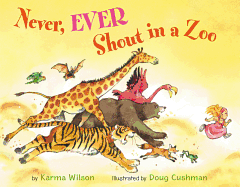
Never, Ever Shout in a Zoo by Karma Wilson

If you haven't noticed, I'm a huge fan of Wilson's books. The text is just enough rhyme to work without being overpowering.


1 Zany Zoo by Lori Degman

This story is way cute, and the kids in all of the groups loved it. A little boy sneaks into the zoo before it opens and sees all of the crazy hijinks that happen when one of the animals gets a key and lets the others loose. The pictures were the favorite part to the kids, who loved looking for the sneaky fox in some of them.


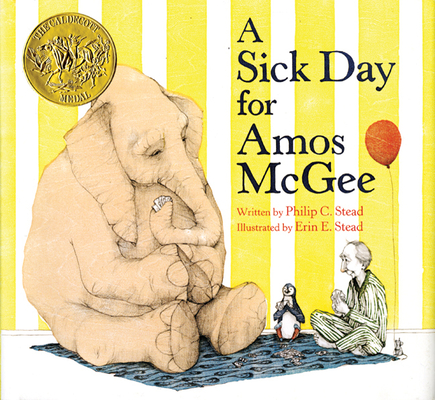
A Sick Day for Amos McGee by Philip C Stead

I only read this one to my oldest group, which is a kindergarten class. They absolutely loved this one. It's such a sweet story, but I think it is geared a little older than preschoolers. I was worried it'd be over the kindergartners' appreciation levels but I was so wrong. When I finished, they wanted me to reread it.


Dear Zoo by Rod Campbell

This popup book was one I could have the kids participate with. Each time we got to a new page, we had a flap to open, and I had the kids call out what they thought was inside. And it was the frog that tripped them up every time. A fun book and they begged me to read it more than once. But I still said no because of the next book.


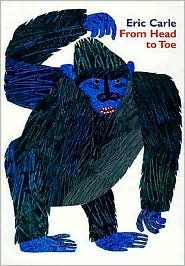
From Head to Toe by Eric Carle

I bought this one in extra large, and I had the kids participate in doing the actions. What fun! I had to give them the warning to be very careful when kicking, but they were all very good sports about it. This is the story they begged to be read more than once, and I did it more than once in each class because I had a blast watching the kids act out the animal motions.

After reading, we played our last game of "Little Mouse," and my preschoolers each begged to kiss him goodbye. This is the same preschool group that broke my original little mouse with their kisses and hugs, but oh, it's worth it. They get a kick out of it.

And finally, our craft. I debated what I wanted to do, but then I pulled this one out since it was easy, fun, and one that required nearly no prep (after the spider hats and prep therein, I was ready for easy...as were my volunteers!):


We made our own snakes. This is such an easy one, and the kids have a blast making the snake exactly how they want to.

To make it, cut a plate into a spiral, until you have a small circle in the center for the head. Color as you want to, then glue on wiggly eyes and a small piece of red felt for a tongue. Voila!

Saturday, June 11, 2011

Summer Reading: A Passive Program

We're doing three summer reading programs for kids this year, separating pre-readers (birth-4), youth (4-12) and teens (12-18). Those who fall in between are welcome to choose which they want to join.

I won't go into details about the program structure yet, as I want to see how it plays out for a couple weeks first, but one of the things I'm doing for both the teens and the youth of all ages is a weekly passive program that looks like this:

I bought 8 water bottles that were sold with the summer reading theme for kids and 8 for teens (the dark blue nalgene bottles). I then went to the grocery store and bought a ton of treats -- goldfish crackers, m&ms, skittles, gummy words, animal crackers, etc. In each bottle, my volunteer and I counted out candy, something different for each of the 8 weeks of our program, then closed the lid. Every week, the kids and teens each have a shot to win the bottle of candy for guessing the number inside. Ah yes, it is tricky, since the kids can't actually see what's inside, so they have to believe in the sign:


Every Monday, we'll go through the responses and the kid with the closest answer wins.

There are pre-cut sheets of paper asking for name, phone number and guess for them to use right at the desk, as well.

I already know this is one of my favorite programs this summer. Why?

It gets the kids and teens to come in every week. It's exceedingly simple, requires virtually no staff time (except for when we counted out the candy and when we'll go through answers) and yet, it's one that even today, on our kickoff date, we had a number of participants in. Everything's already in the bottles and sorted, so it's a quick Monday morning prep program, and I cannot wait to present the winners their little souvenir each week.

As I mentioned, today was our kickoff for the program. It was cold and rainy, and since our events are outside under a tent, the turnout was a little disappointing for our magician. But the magician was excellent, and the kids who were there had a total blast. The jokes were just right, too, that the adults could enjoy them. I had one mom tell me how fabulous the performer was, too, which I relayed to him afterward (when he gave my intern and I some other magic tricks).

So far, sign up looks good, and there are almost as many teens signed up as littler kids. My goal's to double the size of teen participation this year from last, and we're already at nearly half of last year's numbers on our first day.

Wednesday, June 8, 2011

Tour my new, improved teen area!

I am in the last days of getting everything together for the summer reading program. I run the programs from birth through 18, so it's a lot of work and a huge payoff, too, I think -- I'll be updating about that as it goes along.

After I returned from my vacation, I came back to find one of the things I wanted was most of the way done. It was my goal to expand the teen area, since our space was tiny and cramped, if you remember. Since we're under strict collection standards through the county, we can't weed much. But a little creativity, a lot of man power, and a lot of thought went into making my teen area nearly TWICE the size.

Let me take you on a tour of the new space (see link above for the old):

This is taken from near the reference desk looking in. If you'll remember, the teen section started behind the face-out shelf holding new materials. Now, it also includes the entire range on the left, as well.

Let's get closer.


This is my new books area. It's also where I put the bookmarks I buy or get sent. On the cart on the right are our magazines.


This is a shot of the open space now for the teens -- I pulled the rug across, so it's clearer that the entire space is theirs. I've got some other aesthetic ideas to help, as well.

For now, let's look at the entire new range of shelves and what I was able to do with them:

Starting at this end, I have my Playaways (which we were just able to put out this week in the shifting!). I'm super excited to have them ready for summer reading. The ones in the children's area have been circulating well, and I am hopeful the teen ones do, too.

The next set of shelves holds our teen non-fiction. We have more than this, but this is the browsing collection, rather than the research-type materials. Just below those books are my new reader's advisory tools. You've seen my trifolds before, and now I've got two acrylic holders for them. The bottom set's empty, but between my intern and I (and that lovely grant I got), we'll be filling those up in no time.

Oh, and we made this incredible sign

I pulled up a free vector image I liked from Vector Stock, then added my text. I thought it was eye catching.

Moo-ving on (I know, I know)


This is now where fiction begins. Having 20 some extra shelves was so helpful, and as you can see, I still am staggering how they are sitting on the shelf. The bigger series books, as well as some of the books by one author that have a real "brand" to them (such as Deb Caletti's paperbacks) are also stacked sideways. It actually can take up less room on a shelf.

There's the shelf in its full glory. I LOVE how the teens truly have an entire space now, and it's closed off enough for them (while being open enough to detract any poor behavior).


Now that fiction shifted, these sets of shelves opened up quite a bit more! I think they begin at D now for fiction, and the top shelves, which once held the non-fiction, can now become areas for:


Book displays, like my world travel one.

Program displays, like the one for my author visit. I love this so much!

And a display space for my teens' Lego creations. The top shelf features one of the scenes from AS King's Please Ignore Vera Dietz (the scene where she is reading notes in a tree house), and the bottom features a battle scene of some sort on the right, and the zombie apocalypse murder film house on the left. Really. That's what it was called and what is going on there.

Here's the chair alcove with my posters. Cozy but not too cozy.

More fiction on this side. I wanted to show off where my Post Secret card project cards went. This summer, my teens can earn prizes for creative projects, and I'll be displaying them in all these little nooks around the teen area.

This is the far side wall, also completely full of teen fiction and my big bulletin board. It looks SO nice now, open with room for a little more growth. My bulletin board is sadly no longer covered in that paper and many of the cork tiles are, how to say, jumping ship in the heat. My intern and I will be tackling that project before Saturday's summer reading kick off and you will surely see it here.

I'm so lucky to have gotten this much space, and I'm so eager for the teen to be able to see it and really make it their own space. For such a small library -- we're in a town of under 10,000 with a service population of about 14,000 -- I have a wonderful space and great resources for my teens. I can't wait to see how they utilize them this summer, especially after marathon classroom visits (every 6th - 10th grade class in town, not counting the non-teen kids I saw, too!). But what I'm trying to highlight in posting about this is how easy it is to make a space, even with a small space. We aren't all lucky enough to have incredible spaces, but we can make what we have pop and always aim for just that little bit more.

Sunday, June 5, 2011

Preparing for summer reading club (a story in photos)

Preparing for summer reading -- which is less than one week away for me -- looks a little like this:


I'm getting in a lot of relaxing outside in the beautiful heat (the 90+ degrees and humidity are things I look forward to after a few years in Texas).

Then there's a lot of this, too:


All of those books are the galleys and finished copies of books I'm extremely fortunate to receive throughout the year for review consideration. A small number are signed, will be used for book club, or are appropriate for the mobile collection I'm building. But the rest? They are the prizes for my teens this summer. Virtually none have copyright dates before 2009 and many aren't even out yet, which means these kids are getting books they want to get their hands on.

It also means my bookshelves at home have breathing room for me to fill up with books I am dying to buy but have put off:

An entire shelf and a half!

But let's not fool ourselves. This is how it really is, both the shelves and myself in this final week before summer reading kicks off:

Monday, May 30, 2011

My path to librarianship


People like Abby and Janssen have talked at length about how to go to library school, but I thought I'd talk briefly about why I decided to go to library school and get into working with youth in libraries.

When I was little, my mom took me to the library all the time. Not just my library, either: we probably went to every library in a 20 mile radius. More than once a week, even. Doing this became easier the older I got, since using a library card at non-system libraries became more common. But in short, I grew up utilizing the resources at the library for enjoyment reading and research for school.

At 16, I took my first job at a Major Card Retailer. It was, how to say, not my cup of tea. The hours were not good -- and during the holidays, I'd be stuck there until very late -- and the management wasn't enjoyable. I began that job in August, and when I ran across an ad for a page position at one of my local libraries in December, I applied. And interviewed. And then, I didn't get the job. The manager told me that my interview went so well, but the candidate chosen had strong references that, as someone who'd only had one job, I didn't have.

I moved on.

Fast forward to February -- a mere month and a half after my interview -- and I get a surprise phone call and job offer from that manager. She'd made the wrong choice, and she wanted me to start as soon as I could. And I did in March.

I loved the job. I put away books for two hours and did things like shifting, facing, shelf reading, and prepping date due stickers twice a week. The people who worked at the library were wonderful, and the fact so many well read people wanted to talk books really made me excited to go to work every day.

A year later, a job one step up from mine opened, and I interviewed, and I was offered the job. Rather than spending 4 hours a night on the floor, I was now spending half that time in technical services helping to process books, as well as movies and CDs (both new to the library!). I loved being in the back end of the job, learning how to make things ready for patron use.

And then I graduated high school and went to college out of state.

Leaving the job was hard, as I had worked there for over two years. It was a great place to be and gave me a spark. I knew I wanted to work with books and around people who appreciated the written word like I did. But the thing was, I always wanted to be a journalist. I loved writing, and I was good at it.

When I entered college, I was handed a great gift: a part-time work-study job at the library. My college's library served as both the college's academic library and the town's public library, so I got to work both sides of the desk, serving college students and the patrons of the small town. I got to do circulation work here, and I had periodic assignments to do a little more, such as processing books, shelf reading, and hunting down pick list items. It was a great job between newspaper deadlines, assignments, and the other demands of college.

I worked that job for four years -- and I had many opportunities to do more than simply work circulation. I took on two years as a late night assistant, working the 9-midnight shift; I took on a summer as a periodicals assistant (meaning I learned the ins and outs of microfilm and microfiche); and I had one project organizing the children's DVDs into a workable, usable manner.

But it was my sophomore year in college where it hit me that this was something I could get behind as a career. I took a class at the world renowned Newberry Library in Chicago, and I had the chance to work in their archives. I got to go up to the super secure archives at the Newberry and measure different artifacts for a new digital library they were building. Little did I know then what I was doing was creating metadata for items. Although this wasn't the most exciting job, what made me fall in love with the idea of working at the library was their reference team.

The point of the class I took was to conduct was was equivalent to a semester-long research project on a topic of choice in Chicago history. I chose to research and write about the history of the red light district, and it was a topic that was incredibly rich with opportunity. The amount of help I had in focusing the project and in finding primary sources is all of credit to the librarians at the Newberry: they helped me hone down my topic to investigate how the structure of Chicago's red light district mirrored social class structure, and I had the chance to read real blue books, along with other pieces of this racy part of history.

Immediately following my class at the Newberry, I took a summer job as a teaching assistant at a Chicago area university. I would be assisting with one section of a class on creative writing and one section of a class on Shakespeare. The classes were of middle school/early high school kids -- those in 7th, 8th, and 9th grades. I had it in my head that if journalism wouldn't pan out, I could try graduate school for English or Creative Writing, and this would be a good opportunity to get some teaching experience under my belt. I lived in a dorm room by myself that summer, a couple hours away from home, with only a couple of other people. The dorm meant to house 1000 some students was home that summer to me and about 6 other people. I had no kitchen, no air, no internet, and no social interaction. I did a LOT of reading, and I did a LOT of thinking.

The thing was, I wasn't cut out for teaching. I loved being with the kids, and quite frankly, I was a terrible disciplinarian. I liked befriending the kids more. My Shakespeare kids in particular were huge readers, and every day, we'd talk about what we were reading. These were the kids who compelled me to finally pick up Harry Potter. I read the entire series in days. Then we'd talk about it. These kids were passionate about reading, and I loved being around that energy, whether we were discussing fun reading or we were plotting out the events in Macbeth. Although I knew I wasn't cut out for teaching, I knew that kids, especially teenagers, had to be part of my future.

But the thing was, I still wanted to be a journalist. I loved the writing and the exploration and it wasn't until I went back to campus the following year, presenting my research, that I realized being a librarian meant I could not only write and share, but I could be the person who helps others discover the wealth of resources available. It was a revelation that led me to ask my college librarian to let me do an internship (which she agreed to!) and where I got to try my hand at archives and at public librarianship.

During my college internship, I got to be the person to suggest that the teen collection include Gabrielle Zevin's Elsewhere and John Green's Looking for Alaska. I got to interview a ton of local librarians, including Joel Shoemaker, who was incredibly active in writing about serving teens in a school library, and I got to check out the North Liberty Public Library, which was one of the forerunners in giving teens their own space in the library. I did a huge project on censorship and banned/challenged books. It was during this internship I began my first professional blog which, I regret to say, is long gone.

Here's the thing, though: I also loved the archives. Going through records, organizing them, and making them available to me really reached my journalist self. It was this passion that led me to seek out an internship the following summer with the Czech-Slovak Museum Library. I loved that internship, too. Sigh.

Although I knew this was the area I needed to be in, I had such split loyalties at the end of the internship. I needed to find a graduate school that let me explore both, and I was extremely fortunate that the University of Texas (at that time) let me double dip like crazy. But it was after that first public library class and that first archives class (along with a couple of less-than-perfect jobs in archives) that made me realize that I needed to be in a library and not the archives. But the plethora of library opportunities were limitless, and I threw a lot of energy into special libraries.

Until I took a class on YA lit. It was then I realized how important working with kids had been. It was then I remembered how much I loved talking books with kids. And it was then that I realized that was where I needed to be.

Which is funny, given that was perhaps the worst class I took at the school. But, from that terrible class came a passion for seeking out good books and talking about them. It was in that class I learned how to sell a book to readers (I believe my book talk titles included The Absolutely True Diary of a Part Time Indian, Hattie Big Sky, and A Long Way Home). But between classes, I was talking with other people passionate about everything in YA.

Then, I graduated.

It was December 2008, right when everything in the world economy fell to pieces. I didn't get a job. I had been supremely lucky to interview for a few jobs prior to graduating -- including more than one that paid for me to fly out and interview -- but nothing came of those trips. I wasn't experienced enough in public libraries/reference. I didn't have the background in YA lit I needed (did I mention the class was weak?). There were people with better experience than me.

Although the seven months of unemployment I experienced were among the most depressing months of my life (and some of the times we really did worry about how we would buy groceries that week), I threw my free time into reading everything I could get my hands on. I read hundreds of YA books. I became familiar with who was who and what books were essential. And then I began my book blog to record these things. Each book made me that much stronger, and each time I wrote about books, I became that much more aware of how important it was to know my audience.

During this time, I was still applying and interviewing for jobs -- I applied to hundreds, interviewed at probably 50 or 60. Each time, though, I knew I was closer and closer to being the strongest candidate I could be. I had programming ideas, I knew how to talk to teens, and I knew the books.

In May 2009, I was offered a job as a teen librarian in Illinois, and it was then I was able to not only interact with teens, books, and research, but I was still able to write. I was blogging for me, but I was also writing to teens every day in my reader's advisory material, in my publicity, in my social media. A year and some months later, I took a job as a Youth Services Librarian, which let me expand my passion for working with young people to serving a wider swath of ages, and it's let me explore more reading and resources.

Some people fall into careers, and though I think there were definite moments of feeling like this was a field I fell into, looking into my history proves it wasn't an accident. I have been able to combine so many of my interests and talents into one area, and I have to say that there really is nothing more enjoyable for me than what sparked it: talking with teens about reading. About books. About resources they have access to.

And then, I get to write about it.

*Edit: I found a copy of my original library blog here!