Saturday, June 11, 2011

Summer Reading: A Passive Program

We're doing three summer reading programs for kids this year, separating pre-readers (birth-4), youth (4-12) and teens (12-18). Those who fall in between are welcome to choose which they want to join.

I won't go into details about the program structure yet, as I want to see how it plays out for a couple weeks first, but one of the things I'm doing for both the teens and the youth of all ages is a weekly passive program that looks like this:

I bought 8 water bottles that were sold with the summer reading theme for kids and 8 for teens (the dark blue nalgene bottles). I then went to the grocery store and bought a ton of treats -- goldfish crackers, m&ms, skittles, gummy words, animal crackers, etc. In each bottle, my volunteer and I counted out candy, something different for each of the 8 weeks of our program, then closed the lid. Every week, the kids and teens each have a shot to win the bottle of candy for guessing the number inside. Ah yes, it is tricky, since the kids can't actually see what's inside, so they have to believe in the sign:


Every Monday, we'll go through the responses and the kid with the closest answer wins.

There are pre-cut sheets of paper asking for name, phone number and guess for them to use right at the desk, as well.

I already know this is one of my favorite programs this summer. Why?

It gets the kids and teens to come in every week. It's exceedingly simple, requires virtually no staff time (except for when we counted out the candy and when we'll go through answers) and yet, it's one that even today, on our kickoff date, we had a number of participants in. Everything's already in the bottles and sorted, so it's a quick Monday morning prep program, and I cannot wait to present the winners their little souvenir each week.

As I mentioned, today was our kickoff for the program. It was cold and rainy, and since our events are outside under a tent, the turnout was a little disappointing for our magician. But the magician was excellent, and the kids who were there had a total blast. The jokes were just right, too, that the adults could enjoy them. I had one mom tell me how fabulous the performer was, too, which I relayed to him afterward (when he gave my intern and I some other magic tricks).

So far, sign up looks good, and there are almost as many teens signed up as littler kids. My goal's to double the size of teen participation this year from last, and we're already at nearly half of last year's numbers on our first day.

Wednesday, June 8, 2011

Tour my new, improved teen area!

I am in the last days of getting everything together for the summer reading program. I run the programs from birth through 18, so it's a lot of work and a huge payoff, too, I think -- I'll be updating about that as it goes along.

After I returned from my vacation, I came back to find one of the things I wanted was most of the way done. It was my goal to expand the teen area, since our space was tiny and cramped, if you remember. Since we're under strict collection standards through the county, we can't weed much. But a little creativity, a lot of man power, and a lot of thought went into making my teen area nearly TWICE the size.

Let me take you on a tour of the new space (see link above for the old):

This is taken from near the reference desk looking in. If you'll remember, the teen section started behind the face-out shelf holding new materials. Now, it also includes the entire range on the left, as well.

Let's get closer.


This is my new books area. It's also where I put the bookmarks I buy or get sent. On the cart on the right are our magazines.


This is a shot of the open space now for the teens -- I pulled the rug across, so it's clearer that the entire space is theirs. I've got some other aesthetic ideas to help, as well.

For now, let's look at the entire new range of shelves and what I was able to do with them:

Starting at this end, I have my Playaways (which we were just able to put out this week in the shifting!). I'm super excited to have them ready for summer reading. The ones in the children's area have been circulating well, and I am hopeful the teen ones do, too.

The next set of shelves holds our teen non-fiction. We have more than this, but this is the browsing collection, rather than the research-type materials. Just below those books are my new reader's advisory tools. You've seen my trifolds before, and now I've got two acrylic holders for them. The bottom set's empty, but between my intern and I (and that lovely grant I got), we'll be filling those up in no time.

Oh, and we made this incredible sign

I pulled up a free vector image I liked from Vector Stock, then added my text. I thought it was eye catching.

Moo-ving on (I know, I know)


This is now where fiction begins. Having 20 some extra shelves was so helpful, and as you can see, I still am staggering how they are sitting on the shelf. The bigger series books, as well as some of the books by one author that have a real "brand" to them (such as Deb Caletti's paperbacks) are also stacked sideways. It actually can take up less room on a shelf.

There's the shelf in its full glory. I LOVE how the teens truly have an entire space now, and it's closed off enough for them (while being open enough to detract any poor behavior).


Now that fiction shifted, these sets of shelves opened up quite a bit more! I think they begin at D now for fiction, and the top shelves, which once held the non-fiction, can now become areas for:


Book displays, like my world travel one.

Program displays, like the one for my author visit. I love this so much!

And a display space for my teens' Lego creations. The top shelf features one of the scenes from AS King's Please Ignore Vera Dietz (the scene where she is reading notes in a tree house), and the bottom features a battle scene of some sort on the right, and the zombie apocalypse murder film house on the left. Really. That's what it was called and what is going on there.

Here's the chair alcove with my posters. Cozy but not too cozy.

More fiction on this side. I wanted to show off where my Post Secret card project cards went. This summer, my teens can earn prizes for creative projects, and I'll be displaying them in all these little nooks around the teen area.

This is the far side wall, also completely full of teen fiction and my big bulletin board. It looks SO nice now, open with room for a little more growth. My bulletin board is sadly no longer covered in that paper and many of the cork tiles are, how to say, jumping ship in the heat. My intern and I will be tackling that project before Saturday's summer reading kick off and you will surely see it here.

I'm so lucky to have gotten this much space, and I'm so eager for the teen to be able to see it and really make it their own space. For such a small library -- we're in a town of under 10,000 with a service population of about 14,000 -- I have a wonderful space and great resources for my teens. I can't wait to see how they utilize them this summer, especially after marathon classroom visits (every 6th - 10th grade class in town, not counting the non-teen kids I saw, too!). But what I'm trying to highlight in posting about this is how easy it is to make a space, even with a small space. We aren't all lucky enough to have incredible spaces, but we can make what we have pop and always aim for just that little bit more.

Sunday, June 5, 2011

Preparing for summer reading club (a story in photos)

Preparing for summer reading -- which is less than one week away for me -- looks a little like this:


I'm getting in a lot of relaxing outside in the beautiful heat (the 90+ degrees and humidity are things I look forward to after a few years in Texas).

Then there's a lot of this, too:


All of those books are the galleys and finished copies of books I'm extremely fortunate to receive throughout the year for review consideration. A small number are signed, will be used for book club, or are appropriate for the mobile collection I'm building. But the rest? They are the prizes for my teens this summer. Virtually none have copyright dates before 2009 and many aren't even out yet, which means these kids are getting books they want to get their hands on.

It also means my bookshelves at home have breathing room for me to fill up with books I am dying to buy but have put off:

An entire shelf and a half!

But let's not fool ourselves. This is how it really is, both the shelves and myself in this final week before summer reading kicks off:

Monday, May 30, 2011

My path to librarianship


People like Abby and Janssen have talked at length about how to go to library school, but I thought I'd talk briefly about why I decided to go to library school and get into working with youth in libraries.

When I was little, my mom took me to the library all the time. Not just my library, either: we probably went to every library in a 20 mile radius. More than once a week, even. Doing this became easier the older I got, since using a library card at non-system libraries became more common. But in short, I grew up utilizing the resources at the library for enjoyment reading and research for school.

At 16, I took my first job at a Major Card Retailer. It was, how to say, not my cup of tea. The hours were not good -- and during the holidays, I'd be stuck there until very late -- and the management wasn't enjoyable. I began that job in August, and when I ran across an ad for a page position at one of my local libraries in December, I applied. And interviewed. And then, I didn't get the job. The manager told me that my interview went so well, but the candidate chosen had strong references that, as someone who'd only had one job, I didn't have.

I moved on.

Fast forward to February -- a mere month and a half after my interview -- and I get a surprise phone call and job offer from that manager. She'd made the wrong choice, and she wanted me to start as soon as I could. And I did in March.

I loved the job. I put away books for two hours and did things like shifting, facing, shelf reading, and prepping date due stickers twice a week. The people who worked at the library were wonderful, and the fact so many well read people wanted to talk books really made me excited to go to work every day.

A year later, a job one step up from mine opened, and I interviewed, and I was offered the job. Rather than spending 4 hours a night on the floor, I was now spending half that time in technical services helping to process books, as well as movies and CDs (both new to the library!). I loved being in the back end of the job, learning how to make things ready for patron use.

And then I graduated high school and went to college out of state.

Leaving the job was hard, as I had worked there for over two years. It was a great place to be and gave me a spark. I knew I wanted to work with books and around people who appreciated the written word like I did. But the thing was, I always wanted to be a journalist. I loved writing, and I was good at it.

When I entered college, I was handed a great gift: a part-time work-study job at the library. My college's library served as both the college's academic library and the town's public library, so I got to work both sides of the desk, serving college students and the patrons of the small town. I got to do circulation work here, and I had periodic assignments to do a little more, such as processing books, shelf reading, and hunting down pick list items. It was a great job between newspaper deadlines, assignments, and the other demands of college.

I worked that job for four years -- and I had many opportunities to do more than simply work circulation. I took on two years as a late night assistant, working the 9-midnight shift; I took on a summer as a periodicals assistant (meaning I learned the ins and outs of microfilm and microfiche); and I had one project organizing the children's DVDs into a workable, usable manner.

But it was my sophomore year in college where it hit me that this was something I could get behind as a career. I took a class at the world renowned Newberry Library in Chicago, and I had the chance to work in their archives. I got to go up to the super secure archives at the Newberry and measure different artifacts for a new digital library they were building. Little did I know then what I was doing was creating metadata for items. Although this wasn't the most exciting job, what made me fall in love with the idea of working at the library was their reference team.

The point of the class I took was to conduct was was equivalent to a semester-long research project on a topic of choice in Chicago history. I chose to research and write about the history of the red light district, and it was a topic that was incredibly rich with opportunity. The amount of help I had in focusing the project and in finding primary sources is all of credit to the librarians at the Newberry: they helped me hone down my topic to investigate how the structure of Chicago's red light district mirrored social class structure, and I had the chance to read real blue books, along with other pieces of this racy part of history.

Immediately following my class at the Newberry, I took a summer job as a teaching assistant at a Chicago area university. I would be assisting with one section of a class on creative writing and one section of a class on Shakespeare. The classes were of middle school/early high school kids -- those in 7th, 8th, and 9th grades. I had it in my head that if journalism wouldn't pan out, I could try graduate school for English or Creative Writing, and this would be a good opportunity to get some teaching experience under my belt. I lived in a dorm room by myself that summer, a couple hours away from home, with only a couple of other people. The dorm meant to house 1000 some students was home that summer to me and about 6 other people. I had no kitchen, no air, no internet, and no social interaction. I did a LOT of reading, and I did a LOT of thinking.

The thing was, I wasn't cut out for teaching. I loved being with the kids, and quite frankly, I was a terrible disciplinarian. I liked befriending the kids more. My Shakespeare kids in particular were huge readers, and every day, we'd talk about what we were reading. These were the kids who compelled me to finally pick up Harry Potter. I read the entire series in days. Then we'd talk about it. These kids were passionate about reading, and I loved being around that energy, whether we were discussing fun reading or we were plotting out the events in Macbeth. Although I knew I wasn't cut out for teaching, I knew that kids, especially teenagers, had to be part of my future.

But the thing was, I still wanted to be a journalist. I loved the writing and the exploration and it wasn't until I went back to campus the following year, presenting my research, that I realized being a librarian meant I could not only write and share, but I could be the person who helps others discover the wealth of resources available. It was a revelation that led me to ask my college librarian to let me do an internship (which she agreed to!) and where I got to try my hand at archives and at public librarianship.

During my college internship, I got to be the person to suggest that the teen collection include Gabrielle Zevin's Elsewhere and John Green's Looking for Alaska. I got to interview a ton of local librarians, including Joel Shoemaker, who was incredibly active in writing about serving teens in a school library, and I got to check out the North Liberty Public Library, which was one of the forerunners in giving teens their own space in the library. I did a huge project on censorship and banned/challenged books. It was during this internship I began my first professional blog which, I regret to say, is long gone.

Here's the thing, though: I also loved the archives. Going through records, organizing them, and making them available to me really reached my journalist self. It was this passion that led me to seek out an internship the following summer with the Czech-Slovak Museum Library. I loved that internship, too. Sigh.

Although I knew this was the area I needed to be in, I had such split loyalties at the end of the internship. I needed to find a graduate school that let me explore both, and I was extremely fortunate that the University of Texas (at that time) let me double dip like crazy. But it was after that first public library class and that first archives class (along with a couple of less-than-perfect jobs in archives) that made me realize that I needed to be in a library and not the archives. But the plethora of library opportunities were limitless, and I threw a lot of energy into special libraries.

Until I took a class on YA lit. It was then I realized how important working with kids had been. It was then I remembered how much I loved talking books with kids. And it was then that I realized that was where I needed to be.

Which is funny, given that was perhaps the worst class I took at the school. But, from that terrible class came a passion for seeking out good books and talking about them. It was in that class I learned how to sell a book to readers (I believe my book talk titles included The Absolutely True Diary of a Part Time Indian, Hattie Big Sky, and A Long Way Home). But between classes, I was talking with other people passionate about everything in YA.

Then, I graduated.

It was December 2008, right when everything in the world economy fell to pieces. I didn't get a job. I had been supremely lucky to interview for a few jobs prior to graduating -- including more than one that paid for me to fly out and interview -- but nothing came of those trips. I wasn't experienced enough in public libraries/reference. I didn't have the background in YA lit I needed (did I mention the class was weak?). There were people with better experience than me.

Although the seven months of unemployment I experienced were among the most depressing months of my life (and some of the times we really did worry about how we would buy groceries that week), I threw my free time into reading everything I could get my hands on. I read hundreds of YA books. I became familiar with who was who and what books were essential. And then I began my book blog to record these things. Each book made me that much stronger, and each time I wrote about books, I became that much more aware of how important it was to know my audience.

During this time, I was still applying and interviewing for jobs -- I applied to hundreds, interviewed at probably 50 or 60. Each time, though, I knew I was closer and closer to being the strongest candidate I could be. I had programming ideas, I knew how to talk to teens, and I knew the books.

In May 2009, I was offered a job as a teen librarian in Illinois, and it was then I was able to not only interact with teens, books, and research, but I was still able to write. I was blogging for me, but I was also writing to teens every day in my reader's advisory material, in my publicity, in my social media. A year and some months later, I took a job as a Youth Services Librarian, which let me expand my passion for working with young people to serving a wider swath of ages, and it's let me explore more reading and resources.

Some people fall into careers, and though I think there were definite moments of feeling like this was a field I fell into, looking into my history proves it wasn't an accident. I have been able to combine so many of my interests and talents into one area, and I have to say that there really is nothing more enjoyable for me than what sparked it: talking with teens about reading. About books. About resources they have access to.

And then, I get to write about it.

*Edit: I found a copy of my original library blog here!

Friday, May 27, 2011

Cobwebs

This place is quiet, but it's because I've been attending Book Expo America this week, and the week prior, I spent talking up the summer reading program to every elementary school and the middle school in town.

There will be plenty to update shortly, including posts about Giant Monopoly, teen book club, and effective and easy school visits.

Thursday, May 12, 2011

Summer Reading: Teen Edition

It's that time of year: the frantic time known as the weeks before summer reading. This year, I'm in charge of the entire shebang for kids age 0-18, so it's even more work than when I've done it before. But I think it's going to be mega rewarding, as well.

I'm putting together my presentations for classroom visits, and I wanted to share my middle and high school presentation. I'm pretty pleased, and as you can see, we've got insane programming and prizes for the kids -- much of which was donated or paid for through the YALSA/Dollar General grant I received. How lucky!

Again: I'm never going back to Powerpoint. Prezi is really the best way to give an in-person presentation, and it's way more fun to put together.


Friday, May 6, 2011

Get Buggy!

This week's story time has been one of my favorite, and I think the same can be said for the kids (though my volunteers may hate me for the craft). Alas, we did bugs. It was fun, too, because it seems the teachers were really into this theme -- one mentioned they wouldn't be able to get to their insect unit in class this year, so it was nice to give them a little bit of that in story time.

We started with If You're Happy and You Know It as our song. I love doing this song, especially since it gives the kids a chance to shout.

I packed about six books for this theme, but in both sets of story times this week, I ended up sharing the same four stories since they were all huge hits.

First:


The Eensy Weensy Spider Freaks Out (Big Time) by Troy Cummings: The kids totally loved this book about a spider who gets scared when the rain on the waterspout threatens to knock her down. The entire book follows Eensy's desire to climb again, and we see her learn to climb a pot, then a mailbox, then a dog, then a house, until finally...she climbs a rocket and sees the earth from outer space. The kids were oohing and ahhing over this one.


The Hungry Little Caterpillar by Eric Carle: A classic story that all of the kids had heard before but you know what? I think bringing in favorites is a good thing. The kids still loved it and were still captivated by how much the caterpillar ate. If you don't incorporate some classic/well-known stories in your story time, I think you're missing out. Kids don't care how many times they've heard it; each reading experience is still fun to them.


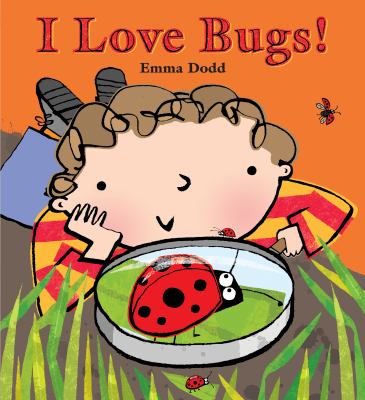
I Love Bugs! by Emma Dodd: Although this is plotless, the pictures of different insects are so fun, it doesn't matter. The illustrations capture the interest of a crowd so easily. I really like Dodd's style, and she's become a bit of a go-to. It's a quick read, but it was all a nice lead up to the final story I shared with the kids.


Can You Make a Scary Face? by Jan Thomas: This book requires -- yes, requires -- the kids to participate. They stand, sit, stand, then wiggle and make scary faces. It's fantastic, and it's a great way to end a story time. One of my classes begged me to read it again.

For a craft, we made spider hats:

I got this photo from another website, but it kind of shows what we did. We took long strips of black paper to form a head band. Using legal size paper, we needed a strip and a half of paper an inch or so wide. I stapled the long strip and half a strip together. Then, we cut more strips of paper into 1/4 inch strips -- enough for 8 to give each kid. The kids folded the paper to make the legs slinky, then glued them onto the headband portion of the spider (which served as the body). And of course, the kids got googly eyes to attach, too. An easy but labor-intensive craft to prep in the classroom on a tight schedule. Fortunately, I have a lot of volunteer help to make it happen for 120 kids. Here are instructions for a twist on my craft, and a better photo of what it might look like.

Ever done a bug story time? I know Awesome Storytime inspired me to do this one, but I don't think I had much book overlap this time because there are so many good insect books.